
 Tank Solutions – Fuel
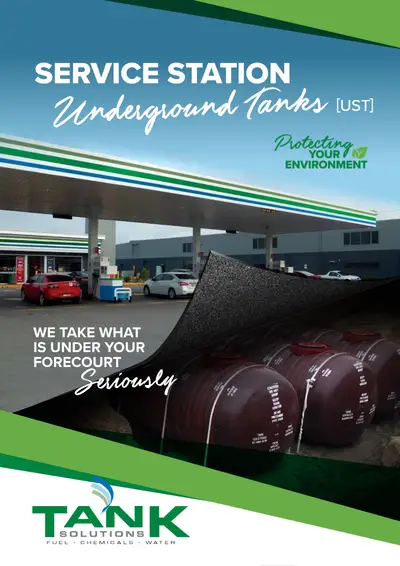
Replacing an underground fuel tank at a service station
What’s involved, who does it, what drives the cost and how leaks are monitored.
Home / Products / Underground fuel / Service station fuel tanks
Double-wall FRP underground fuel tanks for new service stations, upgrades and replacements, with full 360-degree secondary containment and interstitial leak monitoring. Glasteel® II steel tanks with an FRP outer wall are the steel option.
Tell us roughly what you need. A sales engineer for your state replies within 2 business days.
Have drawings or a full spec? Use the detailed quote form, or call NSW +61 2 4964 8270 or WA +61 8 9434 1707.
Full 360-degree secondary containment allows continuous monitoring of both the inner and outer walls, so a leak in the primary wall is contained before it reaches groundwater.
Tanks are corrosion-resistant and maintenance-free, and can be split into up to four compartments so several fuel grades share one tank and one excavation. Each is made to meet or exceed UL 1316, carries a 30-year warranty against structural failure and internal and external corrosion, and is installed by an accredited installer.
Where a steel structural tank is preferred, Glasteel® II pairs a welded steel tank with an FRP outer wall that fully encloses it.
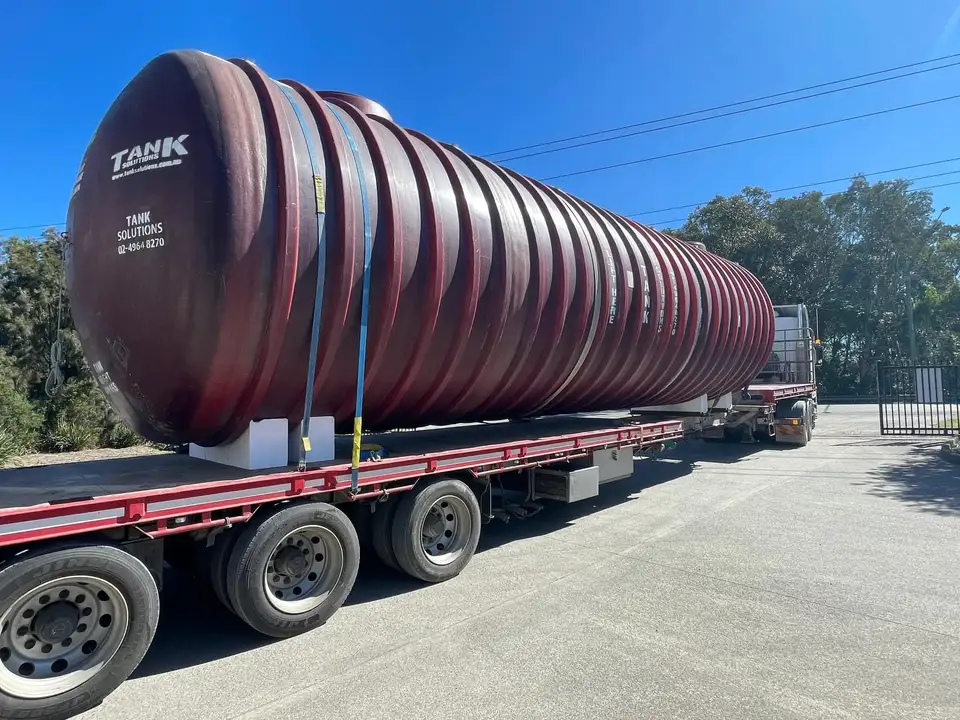
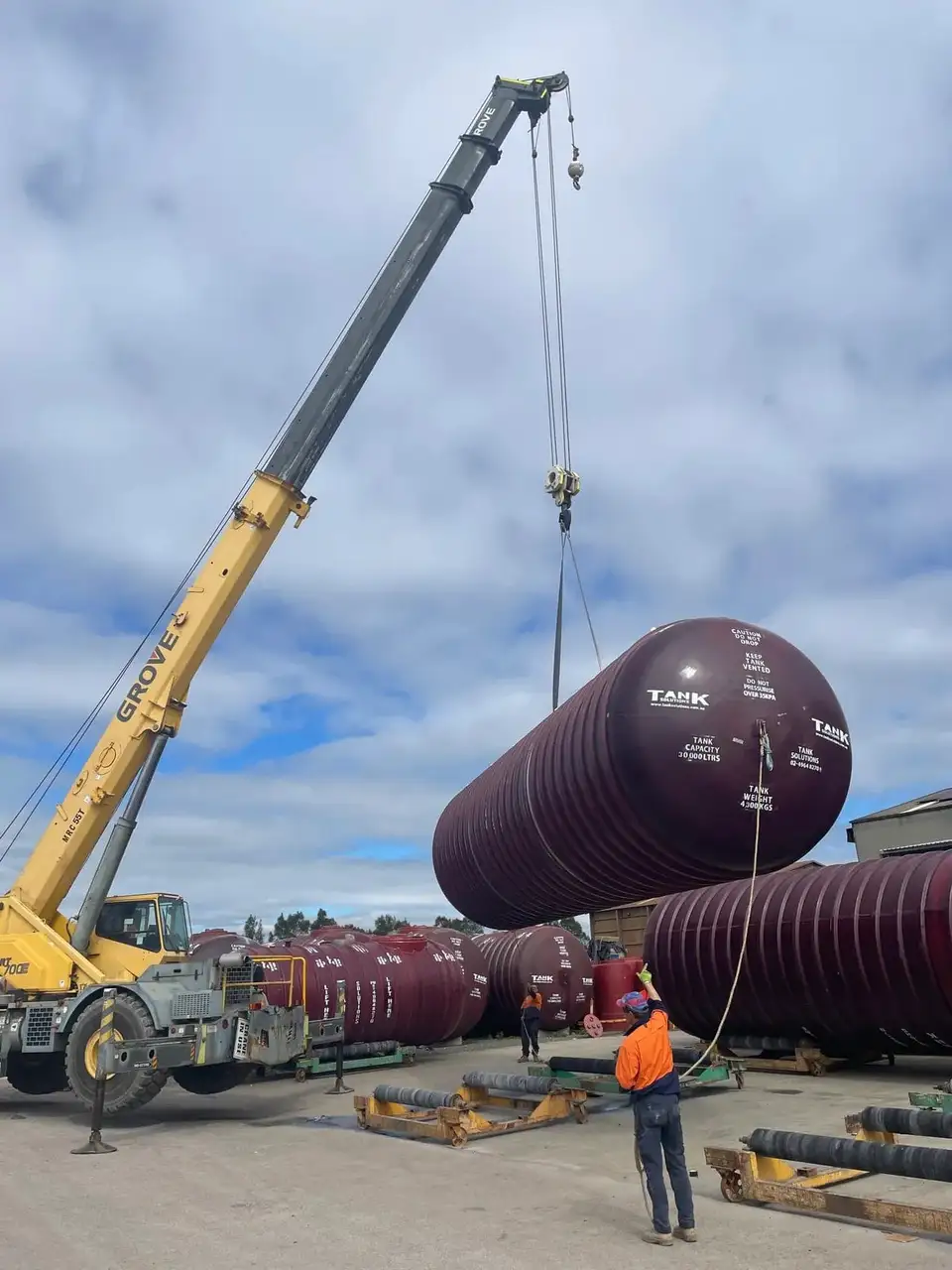
Manufactured at our Tomago NSW and Kwinana Beach WA sites, both certified to ISO 9001.
We build to your spec. Send us the application, capacity and site, and a sales engineer covering your state will reply within 2 business days.
Send us your specService station tanks run from 2,000L to 150,000L, with 1 to 4 completely separate compartments depending on size, so several grades share one tank and one excavation. Size the tanks and compartments for your sales.
| Tank | Capacity | Compartments | Leak monitoring |
|---|---|---|---|
| Double-wall FRP | 2,000–150,000L | 1–4, depending on size | Truchek® hydrostatic |
| Glasteel® II | 2,000–200,000L | 1–4, depending on size | Factory-fitted interstitial vacuum gauge |
| Compartments | Example layout |
|---|---|
| Single | One grade, such as diesel |
| Dual | Two grades, such as unleaded and diesel |
| Triple | Three grades, such as unleaded, premium and diesel |
| Quad | Four grades, such as unleaded, premium, diesel and AdBlue |
Compartment sizes are set to your site. The standard double-wall FRP models, with lengths and weights, are on the double-wall FRP page.
Our service station tanks are double-wall. The outer wall fully surrounds the inner wall, and the interstitial space between them is monitored, so a leak in either wall shows up before fuel reaches soil or groundwater.
If the primary wall ever leaks, the outer wall holds the fuel in the interstitial space instead of letting it reach groundwater.
On double-wall FRP tanks, Truchek® keeps the interstitial space filled with brine, and a reservoir on top of the tank holds it at a set level. It gives continuous leak detection, lets the owner do a visual tank tightness test and meets EPA requirements.
Glasteel® II tanks leave the factory with the interstitial space under vacuum and a vacuum gauge fitted. A break in the inner or outer wall causes a loss of vacuum, which shows on the gauge.
Double-wall FRP tanks get a third-party tank test after installation to AS 4897, using USEPA methods, before the site is commissioned.
General information only, not compliance advice. Your state EPA sets the leak detection and monitoring rules for each site.
Both are double-wall with a monitored interstitial space. Double-wall FRP is fibreglass inside and out. Glasteel® II gives you the strength of a welded steel tank, fully enclosed in an FRP outer wall, so the steel never touches soil or groundwater and needs no cathodic protection.
| Feature | Double-wall FRP | Glasteel® II |
|---|---|---|
| Inner wall | FRP with integral ribs and Parabeam 3D fibreglass | Welded mild steel |
| Outer wall | FRP, full 360-degree containment | FRP, fully enclosing the steel tank |
| Leak monitoring | Truchek® hydrostatic | Factory-fitted interstitial vacuum gauge |
| Corrosion | Rust-proof inside and out | Steel kept out of soil and groundwater; no cathodic protection |
| Capacity | 2,000–150,000L | 2,000–200,000L |
| Standards | UL 1316 | UL 58, AS 1692 |
| Warranty | 30 years, structural and corrosion | 30 years, structural and corrosion |
| Risers | 1,200 mm collars standard on pressure systems | 1,200 mm with 600NB manway, or 1,500 mm for large turbines |
See double-wall FRP tanks and Glasteel® II tanks for the full specifications and warranty terms.
Older tanks need replacing once they reach the end of their service life. A double-wall replacement adds secondary containment and interstitial leak monitoring.
We manufacture the tank to your spec. An accredited installer from our installer directory installs and tests it; a non-accredited installation voids the warranty. Read our guide to replacing a service station tank.
Every site is different, so we price each tank to your spec. Send us your spec and a sales engineer covering your state will reply within 2 business days.
What’s involved, who does it, what drives the cost and how leaks are monitored.
Double-wall FRP tanks with 360-degree secondary containment for service station upgrades and replacements.
A large-capacity underground Glasteel® tank in single to quad compartment designs, for regional service stations storing several fuels.
Can’t see yours? Call NSW +61 2 4964 8270 or WA +61 8 9434 1707.
A few details up front means your quote comes back faster, from the right engineer for your state. We price each tank to your spec, with no obligation, and reply within 2 business days.
Your enquiry has gone to our sales team. A sales engineer will be in touch within 2 business days.
Need it sooner? Call NSW +61 2 4964 8270 or WA +61 8 9434 1707.
Please email your drawings and documents to sales@tanksolutions.com.au with your name in the subject line, so we can add them to this enquiry.
Double-wall FRP tank for underground fuel storage.
Steel inner wall with an FRP outer containment wall.
Underground FRP tank that keeps AdBlue cool and stable.